Best Foods for Strong, Healthy Nails: A Practical Eating Guide
| The idea | Nails are built from protein, so the best foods for healthy nails are the ones that supply keratin’s building blocks — protein, iron, zinc, biotin and omega-3 fats. |
| Everyday picks | Eggs, oily fish, beans, lentils, Greek yoghurt, nuts, pumpkin seeds, leafy greens and colourful vegetables. |
| Reality check | No single food is magic, change is gradual, and diet works best alongside gentle daily nail care. |
When people search for the best foods for healthy nails, they are usually hoping for one miracle item to add to the shopping list. The honest answer is more useful than that: nails are made of a protein called keratin, and they grow from raw materials your body assembles out of what you eat. Give your body a steady supply of the right nutrients and you support stronger, more resilient nails from the inside — no single “superfood” required.
This guide breaks down the nutrients most closely linked to nail health, the everyday foods that deliver them, a sample day of nail-friendly eating, and the realistic expectations that keep you from chasing quick fixes. It pairs naturally with our guides on what causes brittle nails that split and peel and what causes ridges in fingernails, since diet is part of both stories.
Why food matters for your nails
Every new millimetre of nail is manufactured at the nail root using amino acids, vitamins and minerals delivered through your bloodstream. If any of those raw materials runs short over time, the nail that grows in can be weaker, thinner, more ridged or more brittle. That is why persistent nail changes are sometimes an early, visible clue to a nutrition gap — and why filling the gap is one of the few things that genuinely changes the nail rather than just its surface.
An important caveat: for most people eating a varied diet, nails are not short of anything. Food fixes help most when there is a real shortfall. So think of this as making sure the essentials are covered, not stacking megadoses.
The key nutrients — and the best foods for each
Protein: the foundation of keratin
Nails are protein, so adequate protein is the single most important dietary factor. Good sources include eggs, fish, chicken and lean meat, plus plant options like beans, lentils, tofu, tempeh and Greek yoghurt. Spreading protein across meals, rather than loading it all into dinner, gives your body a steadier supply of building blocks.
Iron: for growth and colour
Low iron is one of the more common nutrient links to weak, spoon-shaped or ridged nails. Iron-rich foods include red meat, lentils, chickpeas, spinach and fortified cereals. Pairing plant sources with vitamin C — think lentils with peppers, or spinach with citrus — helps your body absorb the iron.
Zinc: for cell turnover
Zinc supports the rapid cell division that nail growth depends on, and a shortfall can show up as white spots or slow, weak growth. Find it in pumpkin seeds, shellfish, beef, chickpeas and cashews.
Biotin and the B vitamins
Biotin (vitamin B7) is the nutrient most associated with nail firmness, and it is found in eggs, nuts, seeds, sweet potatoes and whole grains. Other B vitamins support the energy metabolism behind healthy growth. Most people get enough biotin from food; supplements mainly help those with a genuine gap.
Omega-3 fats and vitamin E: for suppleness
Healthy fats help the skin around the nail stay conditioned and the nail stay flexible rather than dry. Oily fish (salmon, sardines, mackerel), walnuts, flaxseed and chia are strong omega-3 sources, while vitamin E from almonds, sunflower seeds and avocado supports skin and nail conditioning.
Vitamin C and colourful produce
Vitamin C helps your body build collagen and absorb iron, and the antioxidants in colourful fruit and vegetables support healthy skin around the nail. Berries, peppers, citrus, kiwi and leafy greens all earn a place on the plate.
Support your nails from the outside too
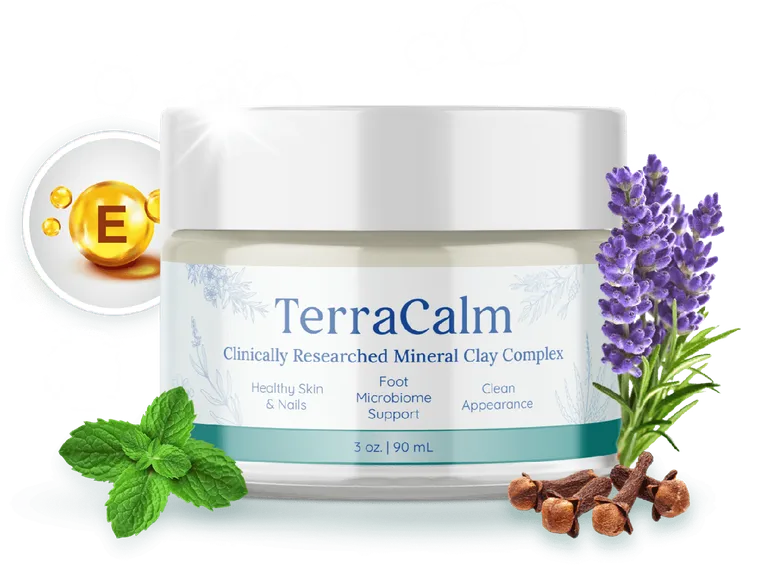
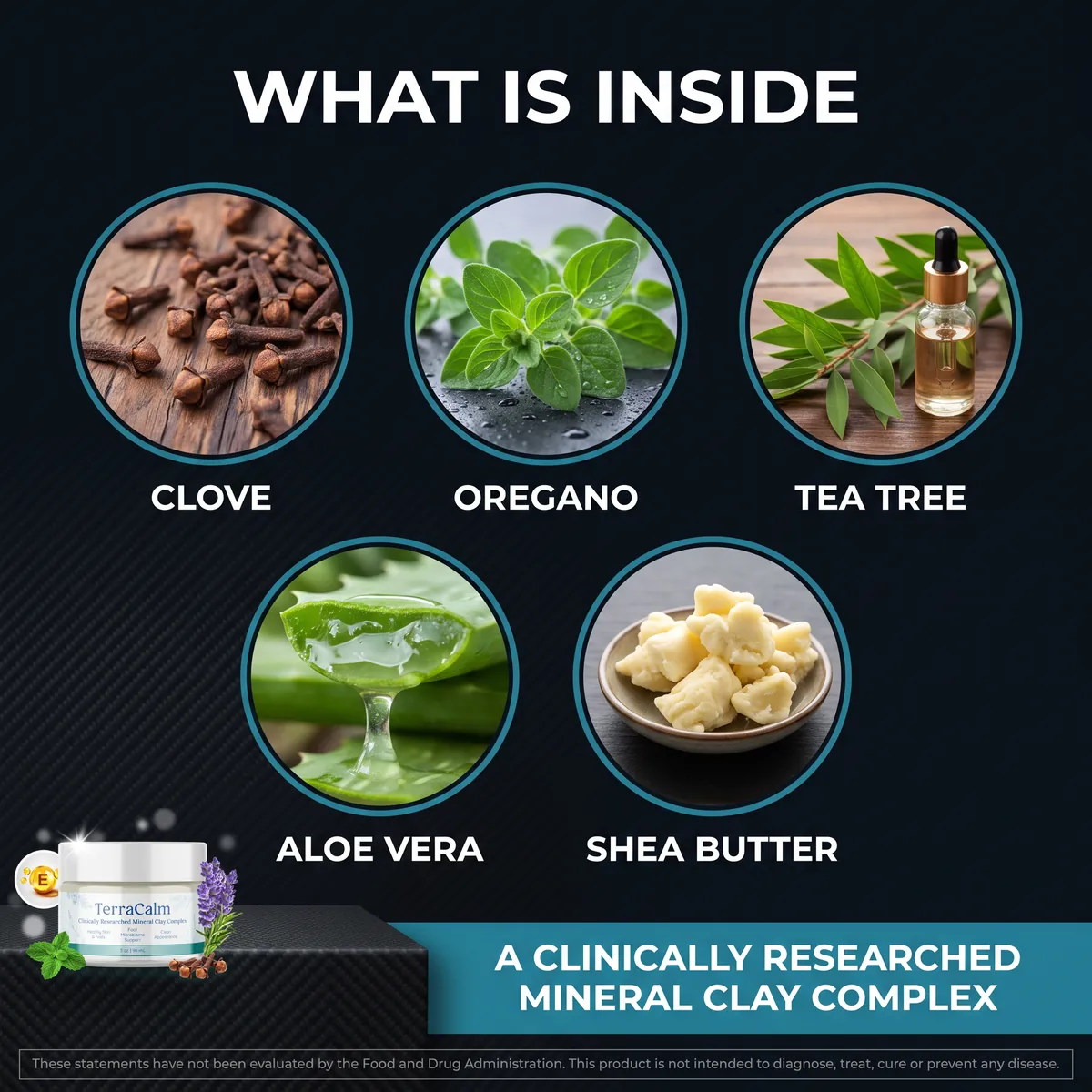
Great nutrition builds the nail; gentle topical care protects it. TerraCalm is a once-daily mineral clay complex with vitamin E, aloe, shea butter and conditioning botanicals for the skin and nails around your feet. Backed by a 60-day guarantee.
A day of nail-friendly eating
You do not need a special diet — just a few deliberate choices woven into normal meals:
- ✓ Breakfast: eggs on wholegrain toast with spinach, or Greek yoghurt with berries, nuts and seeds.
- ✓ Lunch: a lentil or chickpea salad with peppers and leafy greens, dressed with olive oil.
- ✓ Dinner: salmon or a bean stew with plenty of colourful vegetables.
- ✓ Snacks: pumpkin seeds, walnuts, a boiled egg, or hummus with vegetable sticks.
- ✓ Hydration: water through the day, since well-hydrated skin around the nail is more resilient.
Realistic expectations (and where topical care fits)
Because nails grow slowly, a better diet shows up gradually — often over two to three months as new nail grows out — not in days. That slow pace is also why chasing a single “nail vitamin” rarely delivers what people hope. Steady, varied eating beats megadoses almost every time, and if your nails are severely weak or changing it is worth asking a doctor to check for a real deficiency before self-supplementing.
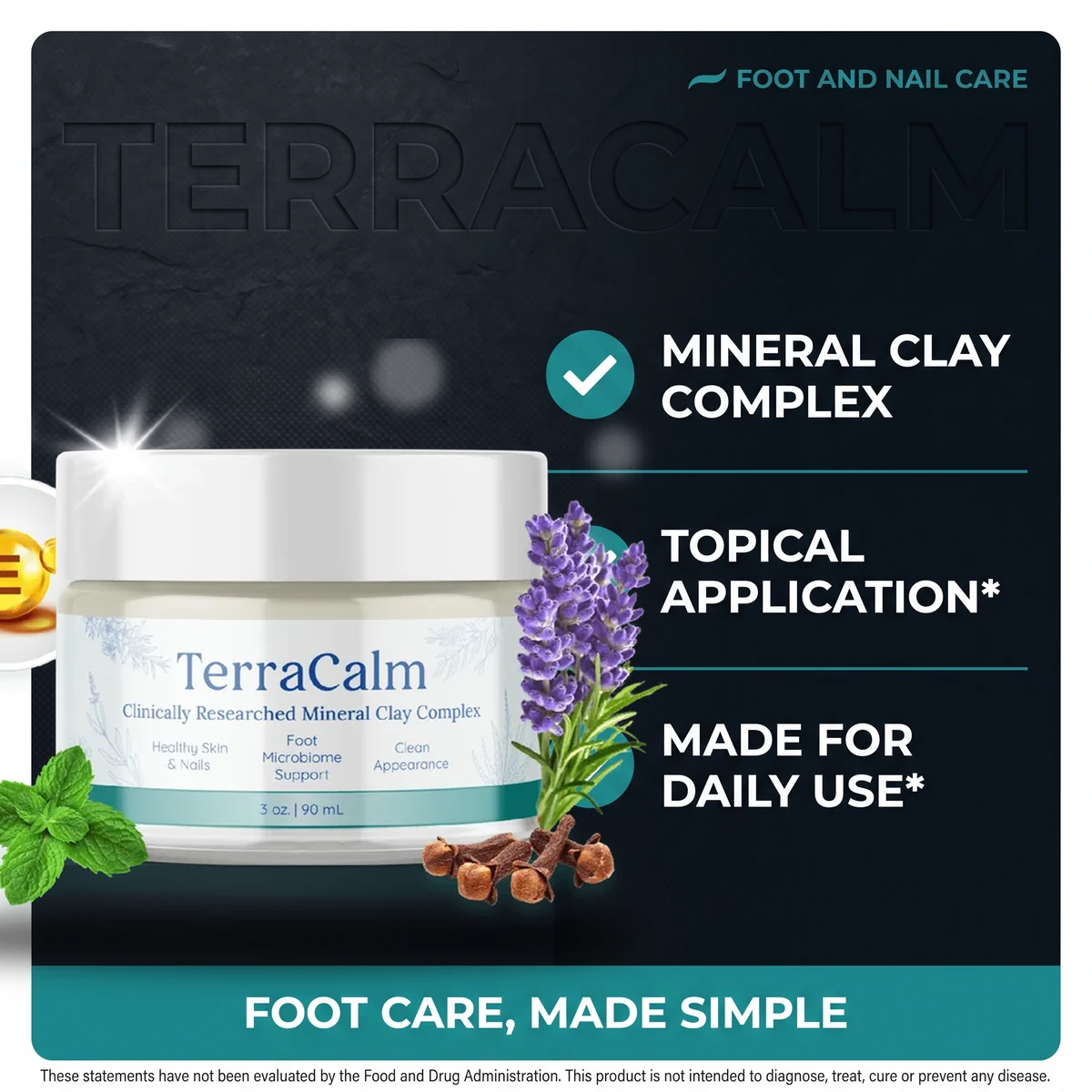
Food takes care of the nail from the inside; gentle daily care protects it from the outside. Keeping the nail and surrounding skin conditioned — with oils and butters like vitamin E, aloe, shea and jojoba, and mineral clays traditionally used to support a clean surface — helps the nail stay supple as it grows. That is the everyday role of a topical like TerraCalm, and it complements, rather than replaces, good nutrition. For the full daily framework, see how to keep your nails healthy and strong.
Three common myths about eating for your nails
“Gelatin makes nails grow faster.” The old belief that eating gelatin strengthens nails has never held up well in practice. Your body breaks dietary protein down into amino acids and rebuilds it as keratin — eating a protein shaped like a nail does nothing special. Total protein quality across the day matters far more than any single source.
“More biotin is always better.” Biotin helps when there is a genuine shortfall, but piling on high-dose supplements does not turn ordinary nails into extraordinary ones, and very high intakes can distort certain blood-test results. Food-first is the safer default, with supplements reserved for a real, identified gap.
“A juice or ‘nail drink’ fixes weak nails fast.” Because nails grow so slowly, nothing you eat or drink changes them overnight. A colourful, balanced plate over weeks and months does far more than any trendy single-ingredient fix, and it comes with benefits for the rest of you too.
What the nutrition research supports, and what it does not
Diet genuinely shows up in nails, but the honest version of that claim is narrower than most food lists suggest. A review in Nutrition in Clinical Practice works through how hair, nail and skin changes map onto specific micronutrient shortfalls — iron, zinc, protein and the B vitamins among them — and stresses that these signs are pointers for investigation, not diagnoses in themselves DiBaise & Tarleton, 2019.
Biotin is the supplement most often sold for nails, and the evidence is thinner than the marketing. A review in the Journal of Dermatological Treatment found the supporting studies small, old and mostly uncontrolled, and concluded that biotin is worth considering for brittle nails but is not established for people who are not deficient Lipner & Scher, 2018. A broader 2026 review in Clinics in Dermatology takes the same line across the vitamins as a class: correcting a real deficiency helps the nail, while topping up a normal level generally does not Singal et al., 2026.
Diet is also worth checking when the damage is behavioural rather than nutritional. If your nails rarely get the chance to grow out because you chew them, no amount of protein will win that argument — the reasons people bite their nails and the techniques that actually break the habit matter more than the shopping list.
Frequently asked questions
What foods are best for healthy nails?
The best foods for healthy nails are ones that supply the building blocks of keratin: protein-rich foods like eggs, fish, poultry, beans and Greek yoghurt, plus iron and zinc from lean meat, lentils and pumpkin seeds, biotin from eggs and nuts, and omega-3s from oily fish and walnuts. A varied whole-food diet covers most nail needs for most people.
Does biotin actually strengthen nails?
Biotin (vitamin B7) is one of the most studied nutrients for nail firmness, and some people with brittle nails notice improvement with adequate intake. Most people get enough from food such as eggs, nuts and whole grains. Supplements may help fill a genuine gap, but more is not automatically better, and biotin can interfere with some lab tests — so mention any supplement to your doctor.
How long before diet changes show in my nails?
Nails grow slowly — fingernails about three millimetres a month, toenails more slowly — so a dietary change shows up gradually as new nail grows in, often over two to three months rather than days. Consistency matters far more than any single “nail superfood”.
Can I fix weak nails with supplements alone?
Supplements work best alongside a balanced diet, not instead of one, and they mainly help when there is a real shortfall. Everyday factors like water exposure and harsh products often matter as much as nutrition. If your nails are severely weak or changing, ask a doctor to check for an underlying deficiency before self-supplementing.
Does TerraCalm contain nutrients for nails?
TerraCalm is a topical mineral clay complex for the skin and nails, not a food or oral supplement — so it does not replace a nail-friendly diet. It includes conditioning botanicals such as vitamin E, aloe and shea butter that support the skin around the nail. It is cosmetic and is not intended to diagnose, treat, cure or prevent any disease.
References
- DiBaise M, Tarleton SM. “Hair, Nails, and Skin: Differentiating Cutaneous Manifestations of Micronutrient Deficiency” Nutrition in Clinical Practice, 2019. PMID 31144371
- Lipner SR, Scher RK. “Biotin for the treatment of nail disease: what is the evidence?” Journal of Dermatological Treatment, 2018. PMID 29057689
- Singal A, et al. “Vitamins and nail: In health and diseases” Clinics in Dermatology, 2026. PMID 41690653
- National Institutes of Health, Office of Dietary Supplements. “Biotin — Fact Sheet for Consumers.” ods.od.nih.gov
- National Institutes of Health, Office of Dietary Supplements. “Iron — Fact Sheet for Consumers.” ods.od.nih.gov
- Harvard T.H. Chan School of Public Health, The Nutrition Source. “Protein.” hsph.harvard.edu
- American Academy of Dermatology. “How to care for your nails.” aad.org
The TerraCalm Research Team is an independent group that writes plain-language, evidence-aware guides on everyday foot, skin and nail care. We read primary dermatology and public-health sources, describe ingredients in terms of their traditional and general use, and are careful to separate cosmetic care from medical treatment. Our articles are reviewed for accuracy before publishing and are intended for general education — not as a diagnosis or a substitute for your own clinician’s advice.
† These statements have not been evaluated by the Food and Drug Administration. This product is not intended to diagnose, treat, cure or prevent any disease. This article is for general information only and is not medical advice; consult a qualified professional about your individual situation.