What Causes Ridges in Fingernails? Vertical vs Horizontal Lines Explained
| The key split | What causes ridges in fingernails depends on direction: vertical ridges (cuticle to tip) are usually harmless and age-related; horizontal ridges across the nail deserve more attention. |
| Common vertical causes | Ageing, dryness, and normal variation — think fine lines for your nails. |
| What helps the look | Keep nails and cuticles conditioned, buff very gently if at all, eat a balanced diet, and see a doctor for sudden horizontal grooves. |
Hold your hand up to the light and you may notice thin lines running along the surface of your nails. It is a common moment of mild worry, and it sends a lot of people searching for what causes ridges in fingernails and whether they signal something wrong. The single most useful thing to know is that direction matters enormously: vertical ridges and horizontal ridges have very different meanings. Get that distinction clear and most of the anxiety around nail ridges melts away.
This guide explains how ridges form, the difference between vertical and horizontal lines, the everyday causes behind each, how to make ridges look less obvious, and the point at which a change is worth a doctor’s opinion.
How ridges form on a nail
Your nail is produced at the matrix, a small factory of cells tucked under the skin at the base of the nail. As new nail is made it is pushed forward and hardens into the plate you see. Anything that subtly changes how evenly the matrix lays down keratin — ageing, dryness, an interruption to growth, or an injury — can leave a raised line or groove in the surface. Because the nail grows out rather than resurfaces, a ridge stays visible until that section reaches the free edge and is trimmed away.
Vertical ridges: usually nothing to worry about
Vertical ridges run lengthwise, from the cuticle to the tip. They are extremely common and, in the vast majority of cases, entirely harmless. The best way to think of them is as fine lines for your nails: just as skin develops subtle lines with age, nails tend to develop faint vertical ridging as the years pass. Dryness makes them look more pronounced, which is why they often stand out more in winter or on nails that are not well conditioned.
On their own — with no colour change, no pain, no thickening and no lifting of the nail — vertical ridges are considered a normal, cosmetic feature of getting older. They do not usually point to a deficiency or disease. Conditioning helps them look smoother, which we come back to below.
Horizontal ridges: worth a closer look
Horizontal ridges — deep grooves that run across the nail from side to side, sometimes called Beau’s lines — are a different matter. They often mark a temporary pause in nail growth, and they can follow a bout of illness, a high fever, significant physical stress on the body, or a direct injury to the nail or its matrix. A single groove after an injury or an illness usually just grows out. But deep horizontal ridges appearing across several nails at once, without an obvious cause, are worth discussing with a doctor, since they can reflect something that briefly affected the whole body.
Everyday causes behind ridged nails
- ✓ Ageing. The most common reason for vertical ridges — a normal part of how nails change over time.
- ✓ Dryness. Under-conditioned nails and cuticles make existing ridges look deeper and more noticeable.
- ✓ Injury to the nail. A knock or repeated trauma to the matrix can leave a groove that grows out.
- ✓ Illness or fever. A temporary interruption to growth can leave a horizontal line behind.
- ✓ Nutrient gaps. Occasionally low iron or other shortfalls contribute to ridged, brittle nails.
- ✓ Over-buffing. Aggressive buffing to “smooth” ridges actually thins and weakens the nail over time.
Condition ridged nails daily
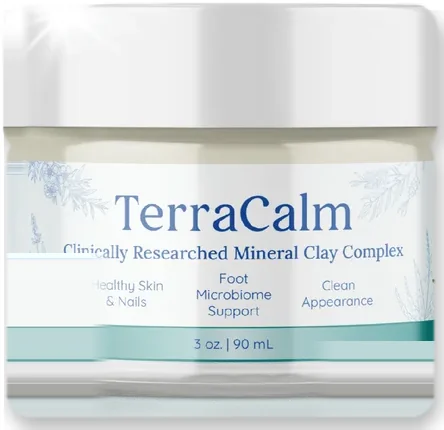
Well-conditioned nails and cuticles make ridges far less obvious. TerraCalm is a once-daily mineral clay complex with vitamin E, aloe, shea butter and jojoba to help keep the nail and surrounding skin soft and supple. Backed by a 60-day guarantee.
How to make nail ridges look smoother
You cannot erase a ridge that is already in the nail — it has to grow out — but you can soften how it looks and support a healthier surface for the new nail growing in:
- ✓ Condition daily. Massage an oil, balm or clay into the nail and cuticle; hydration makes ridges less visible almost immediately.
- ✓ Buff sparingly, if at all. A light, occasional buff can smooth the surface, but heavy buffing thins the nail — do less than you think you need.
- ✓ Use a ridge-filling base coat. If you polish, a ridge-filling base evens the surface without abrasion.
- ✓ Protect the cuticle. The cuticle seals the matrix where nail is made; keep it intact and moisturised.
- ✓ Eat for keratin. A balanced diet supports smoother new growth — see our guide to the best foods for strong, healthy nails.

Where conditioning care fits
Because dryness is what makes ridges look their worst, keeping the nail and surrounding skin well conditioned is the most reliable everyday step. Oils and butters such as vitamin E, aloe, shea, jojoba and sweet almond soften the surface and the skin around it, while mineral clays like bentonite and kaolin are traditionally used to support a clean, balanced surface. A once-daily formula such as TerraCalm brings those conditioning roles together. It will not remove a ridge, but it can help ridges look smoother and support a healthy-looking surface as new nail grows. Ridges and brittleness often travel together, so it is worth reading alongside what causes brittle nails that split and peel.
When ridges deserve a doctor’s eye
Everyday conditioning handles the appearance of most vertical ridges, but it is not a substitute for medical advice. See a doctor or dermatologist if ridges appear suddenly, if you notice deep horizontal grooves across several nails, or if ridging comes with colour changes, thickening, pitting, nails lifting from the bed, or pain. Those combinations can point to a nutritional, skin or general-health matter worth investigating. People with diabetes or circulation concerns should have persistent nail changes assessed promptly.
Start Your Daily Nail-Conditioning Ritual
What the research says about nail ridges
Longitudinal ridging — the fine vertical lines running from cuticle to tip — is one of the most reliably documented age changes in the nail. A study of nail changes in elderly patients published in the Journal of Cosmetic Dermatology found ridging among the most common findings in older age groups, alongside thickening and colour change El-Domyati et al., 2014. In other words, vertical ridges are usually a record of time rather than a warning.
Horizontal ridges are the ones that carry information. A 2026 clinical review in the Journal of the American Academy of Dermatology covers transverse grooves among the mechanical and structural nail disorders and explains how they date a past interruption to nail growth Ricardo et al., 2026. Where ridging arrives with a colour change or affects several nails at once, a companion review on nail colour and vasculature as signs of systemic disease is the reason to have it looked at properly Zhou et al., 2025.
Ridging often gets noticed at the same time as pace, because both become visible when you start paying attention to the nail as a growing structure. If the ridges seem to be taking forever to travel to the tip, the reasons nails grow slowly explain the timescale you are actually working with.
Frequently asked questions
Are vertical ridges in fingernails normal?
Yes. Faint vertical ridges that run from the cuticle to the tip are one of the most common and harmless nail changes, and they tend to become more noticeable with age — much like fine lines on the skin. On their own, without colour change, pain or nails lifting, they are usually just a cosmetic feature of getting older.
What do horizontal ridges across nails mean?
Deep horizontal grooves that cross the nail (sometimes called Beau’s lines) are worth more attention than vertical ridges. They often mark a temporary pause in nail growth caused by illness, high fever, injury to the nail, or significant stress on the body, and they grow out over time. If they appear across several nails without an obvious cause, ask a doctor.
Do ridges in nails mean a vitamin deficiency?
Not usually. Most vertical ridging is age-related rather than a deficiency sign. That said, low iron and some other nutrient gaps can contribute to ridged or brittle nails, so if ridging is pronounced and paired with other symptoms, a balanced diet and a doctor’s check are sensible — rather than assuming a specific supplement is the answer.
Can you get rid of nail ridges?
You cannot erase ridges that are already in the nail, but you can soften their appearance. Keeping nails and cuticles well conditioned makes ridges less obvious, and very gentle buffing can smooth the surface — though heavy buffing thins and weakens the nail, so it should be done sparingly, if at all.
Does TerraCalm remove nail ridges?
No. TerraCalm is a cosmetic topical mineral clay complex for everyday skin and nail care. Conditioning the nail and surrounding skin can help ridges look less pronounced and support a healthy-looking surface as new nail grows, but the product does not remove ridges and is not intended to diagnose, treat, cure or prevent any disease.
References
- El-Domyati M, et al. “Nail changes and disorders in elderly Egyptians” Journal of Cosmetic Dermatology, 2014. PMID 25399619
- Ricardo JW, et al. “Evaluation and management of mechanical and structural nail disorders: A clinical review” Journal of the American Academy of Dermatology, 2026. PMID 41242632
- Zhou MH, et al. “Part I. Changes in Nail Color and Vasculature as Signs of Systemic Disease” Journal of the American Academy of Dermatology, 2025. PMID 41176255
- American Academy of Dermatology. “12 nail changes a dermatologist should examine.” aad.org
- Mayo Clinic. “Nails: Do’s and don’ts for healthy nails.” mayoclinic.org
- Harvard Health Publishing. “What your nails say about your health.” health.harvard.edu
- MedlinePlus (U.S. National Library of Medicine). “Nail abnormalities.” medlineplus.gov
The TerraCalm Research Team is an independent group that writes plain-language, evidence-aware guides on everyday foot, skin and nail care. We read primary dermatology and public-health sources, describe ingredients in terms of their traditional and general use, and are careful to separate cosmetic care from medical treatment. Our articles are reviewed for accuracy before publishing and are intended for general education — not as a diagnosis or a substitute for your own clinician’s advice.
† These statements have not been evaluated by the Food and Drug Administration. This product is not intended to diagnose, treat, cure or prevent any disease. This article is for general information only and is not medical advice; consult a qualified professional about your individual situation.