Why Do My Nails Grow So Slowly? Causes and Daily Habits That Help
| The main answer | Why do my nails grow so slowly? Nails grow only about 3–3.5 mm a month, and age, cold weather, diet gaps, poor circulation and repeated damage all slow that natural pace. |
| What is normal | Fingernails take 4–6 months to fully grow out; toenails can take a year or more. Slow does not always mean unhealthy. |
| What helps | Eat enough protein and nutrients, protect nails from damage, keep hands warm and moving, and condition the nail and cuticle daily. |
You file your nails, you wait, and weeks later they look almost exactly the same. If it feels like your nails barely move while everyone else’s seem to sprout overnight, you have probably searched why do my nails grow so slowly more than once. The reassuring news is that nail growth is genuinely slow for everyone — it is one of the slower renewal processes in the body — and a lot of what feels like “stuck” nails is simply the normal pace, nudged slower by a handful of everyday factors.
This guide explains how fast nails actually grow, why that speed varies from finger to finger and season to season, the lifestyle and diet reasons behind slow nail growth, and the daily habits that give your nails the best chance to grow out strong and healthy-looking.
How fast do nails really grow?
On average, a fingernail grows about 3 to 3.5 millimetres a month — roughly a millimetre every ten days, or about the width of this letter “o” over a month. At that rate it takes around four to six months to replace a whole fingernail from the base to the free edge. Toenails are far slower still, growing closer to one millimetre a month, which is why a damaged big-toe nail can take a year or more to grow out completely. So before you assume something is wrong, it is worth recalibrating: nails are supposed to feel slow. What people notice as “slow growth” is often just the honest speed of keratin production finally being paid attention to.
Why nail growth varies from finger to finger
Not all your nails grow at the same rate, and that is completely normal. Nails on your dominant hand tend to grow slightly faster because that hand is used and stimulated more. Longer fingers — the middle finger in particular — usually grow a little quicker than the thumb and little finger. Growth is also faster in younger people, during the warmer months, and even, for some, a touch faster during pregnancy thanks to circulation and hormonal changes. Cold weather, on the other hand, is one of the most common everyday reasons nails seem to stall in winter: less blood flow to the extremities means the matrix works a little more slowly.
The everyday causes of slow nail growth
Nails are produced by the matrix, the living tissue tucked under the base of the nail. Anything that reduces the resources reaching that factory, or that keeps breaking off the nail before it can grow out, will make growth look painfully slow. The most common culprits are lifestyle and diet, not disease.
- ✓ Age. Nail growth naturally slows as we get older — a normal, gradual change, not a fault.
- ✓ Cold and poor circulation. Less blood flow to the hands and feet means the matrix gets fewer resources and works slower.
- ✓ Diet gaps. Low protein, iron, zinc or general under-eating gives the body less to build nails with.
- ✓ Repeated damage. Biting, picking, harsh removers and rough manicures break nails off before length can show — it only looks like slow growth.
- ✓ Over-filing and buffing. A thinned, weakened nail chips at the tip so length never accumulates.
- ✓ General health and medication. Illness, stress and some medicines can temporarily slow the matrix.
Notice how many of these are really about the nail breaking at the tip rather than growing slowly at the root. If your problem is more that nails snap or peel before they get anywhere, our guide to what causes brittle nails that split and peel tackles that side of the story directly.
Does diet actually speed up nail growth?
Here is the honest answer: a good diet lets your nails grow at the healthiest version of their natural rate, but no food or supplement forces them to grow faster than your genetics allow. Nails are made largely of keratin, a protein, so a diet with enough protein gives the matrix its raw material. Iron matters because low iron is one of the more common nutritional links to weak, slow-seeming nails. Zinc, biotin and a generally varied diet round things out. The key nuance most “grow your nails fast” posts skip is this: correcting a real deficiency can genuinely improve growth and quality, but piling on supplements when you already eat well does not push nails past their ceiling. For the foods that actually matter, see the best foods for strong, healthy nails.
Condition nails as they grow out
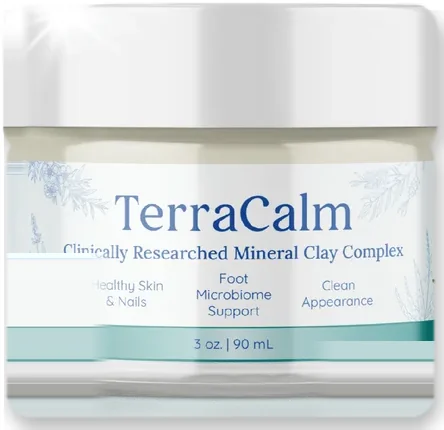
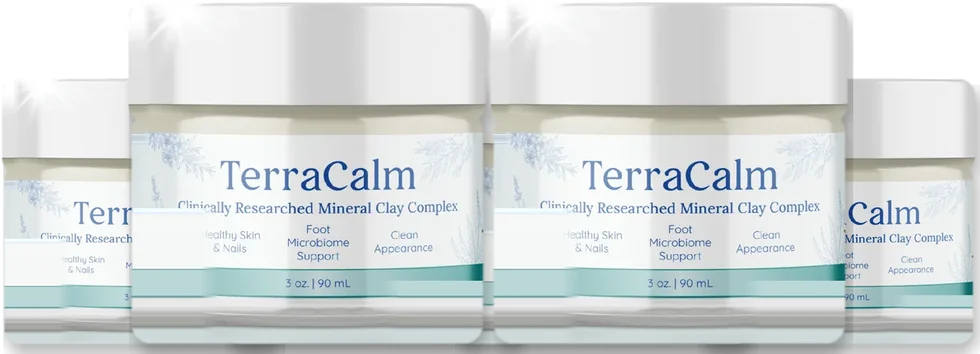
You cannot rush the matrix, but you can help every millimetre of new growth reach the tip looking smooth and healthy instead of chipping away first. TerraCalm is a once-daily topical mineral clay complex with vitamin E, rosemary, aloe, shea butter and jojoba to keep the nail and the skin around it soft, supple and cared for — so slow growth is at least healthy growth. Backed by a 60-day guarantee.
Daily habits that support faster, healthier nail growth
Since you cannot speed the root, the winning strategy is to stop losing length at the tip and keep the matrix well supplied. Give these a couple of months — roughly the time it takes new nail to become visible:
- ✓ Protect the tips. Wear gloves for wet work and gardening so nails are not constantly chipped and worn down.
- ✓ Stop the damage. Ease off biting, picking and aggressive removers — the single biggest reason nails never gain length.
- ✓ Keep hands warm and moving. Good circulation feeds the matrix; keep hands warm in winter and stay active.
- ✓ Eat for keratin. Enough protein plus iron, zinc and a varied diet gives nails what they need to form well.
- ✓ Massage the nail base. A gentle daily cuticle massage supports blood flow and keeps the surrounding skin supple.
- ✓ File, do not tear. Shape nails with a fine file in one direction so the free edge stays smooth and does not catch and rip.
- ✓ Condition daily. Keep the nail and cuticle moisturised so new growth stays flexible and looks healthy.
Where conditioning care fits
Slow growth is mostly about patience plus removing the things that break nails early, and the skin around the nail plays a quiet supporting role. Conditioning oils and butters such as vitamin E, aloe, shea, jojoba and sweet almond keep the cuticle and nail fold supple so new nail glides out without catching, while antioxidant botanicals like rosemary are traditionally used to support resilient-looking skin, and mineral clays such as bentonite and kaolin help maintain a clean, balanced surface. A simple once-daily routine with TerraCalm makes that care easy to keep up over the months growth actually takes. For the complete everyday routine, read this alongside how to keep your nails healthy and strong.
When slow nail growth deserves a doctor’s eye
Most slow-growing nails are simply normal, or the result of everyday habits and season. See a doctor or dermatologist, though, if growth stops or slows dramatically and suddenly across many nails, if nails also change colour, thicken, lift, become spoon-shaped or develop dark streaks, or if slow growth comes alongside symptoms such as fatigue, hair loss or feeling cold — which can point to a nutritional or thyroid matter worth checking. People with diabetes or circulation concerns should have persistent nail changes assessed rather than assuming they are purely cosmetic.
Start Your Daily Nail-Conditioning Ritual
How fast a nail is actually supposed to grow
There is a real number behind this question. A study in the Journal of the European Academy of Dermatology and Venereology measured fingernail and toenail growth in healthy young American adults over a defined period and found fingernails advancing at roughly three millimetres a month, with toenails markedly slower Yaemsiri et al., 2010. Set against that, most nails people describe as slow are growing normally.
A later study in the Indian Journal of Plastic Surgery measured normal fingernail growth in an Indian population and landed in a comparable range, which is reassuring for anyone wondering whether the figure travels Babu et al., 2024. Age is the factor that genuinely shifts it: a study of nail changes in elderly patients in the Journal of Cosmetic Dermatology documented the slowing and thickening that accompany later decades El-Domyati et al., 2014.
Frequently asked questions
Why do my nails grow so slowly?
Fingernails grow about 3 to 3.5 millimetres a month on average, and several everyday things slow that down: getting older, cold weather, a diet low in protein or key nutrients, poor circulation to the hands, and repeated damage from harsh products or biting. Nails on your dominant hand and on longer fingers tend to grow a little faster, and toenails grow far slower than fingernails.
How fast should fingernails grow?
On average a fingernail grows roughly 3 to 3.5 millimetres per month, which means it can take about four to six months to fully replace a fingernail from base to tip. Toenails grow much more slowly — around 1 millimetre a month — so a toenail can take a year or more to grow out completely. Growth is naturally faster in youth and warmer months.
Can diet make my nails grow faster?
A balanced diet supports the healthiest growth your body can produce, but no food speeds nails beyond their natural rate. Protein provides the building blocks of keratin, and iron, zinc, biotin and general good nutrition help nails form properly. If your diet is genuinely lacking, correcting the gap can improve growth and quality; beyond meeting your needs, extra supplements do not force faster growth.
Does massaging nails help them grow?
Gently massaging the nail and cuticle area is a pleasant habit that supports blood flow to the nail matrix and keeps the surrounding skin supple, which helps nails grow out looking healthy. It will not dramatically accelerate growth on its own, but combined with protecting the nail from damage and eating well it is part of a sensible routine.
Do toenails grow slower than fingernails?
Yes, considerably. Toenails grow at roughly a third of the pace of fingernails, so a toenail can take a year or more to grow out fully. This is why a bruised or lost toenail seems to take forever to look normal again, and why patience matters especially with foot-nail concerns.
Does TerraCalm make nails grow faster?
No. TerraCalm is a cosmetic topical mineral clay complex for everyday skin and nail care. It does not change how fast the matrix produces nail, but conditioning the nail and cuticle helps new growth reach the tip looking smooth and cared for, and it is not intended to diagnose, treat, cure or prevent any disease.
References
- Yaemsiri S, et al. “Growth rate of human fingernails and toenails in healthy American young adults” Journal of the European Academy of Dermatology and Venereology, 2010. PMID 19744178
- Babu V, et al. “The Normal Growth Rate of Human Fingernails in Indian Population” Indian Journal of Plastic Surgery, 2024. PMID 39345670
- El-Domyati M, et al. “Nail changes and disorders in elderly Egyptians” Journal of Cosmetic Dermatology, 2014. PMID 25399619
- American Academy of Dermatology. “How to grow long, strong nails.” aad.org
- Mayo Clinic. “Nails: Do’s and don’ts for healthy nails.” mayoclinic.org
- Harvard Health Publishing. “What your nails say about your health.” health.harvard.edu
- MedlinePlus (U.S. National Library of Medicine). “Nail abnormalities.” medlineplus.gov
The TerraCalm Research Team is an independent group that writes plain-language, evidence-aware guides on everyday foot, skin and nail care. We read primary dermatology and public-health sources, describe ingredients in terms of their traditional and general use, and are careful to separate cosmetic care from medical treatment. Our articles are reviewed for accuracy before publishing and are intended for general education — not as a diagnosis or a substitute for your own clinician’s advice.
† These statements have not been evaluated by the Food and Drug Administration. This product is not intended to diagnose, treat, cure or prevent any disease. This article is for general information only and is not medical advice; consult a qualified professional about your individual situation.