Why Do My Feet Sweat and Smell? Causes and Daily Remedies
| Why it happens | If you wonder why do my feet sweat and smell, the answer is a combination: feet have huge numbers of sweat glands, and trapped moisture inside socks and shoes lets skin bacteria break down sweat into odour. |
| Biggest lever | Control the moisture. Dry feet thoroughly, rotate shoes, and wear breathable socks — bacteria need dampness to thrive. |
| See a doctor if | Sweat soaks through socks daily, odour resists good hygiene, or skin itches, peels or blisters. |
Kick off your shoes at the end of a long day and the answer to why do my feet sweat and smell announces itself before you can. It is one of the most relatable foot complaints there is — and, happily, one of the most manageable once you understand the simple chain of events behind it. Foot odour is not a sign of poor hygiene so much as a predictable result of biology plus footwear, and the same understanding that explains it also points to the fix.
This guide covers why feet sweat more than almost anywhere else, why that sweat turns smelly, the everyday habits and gear that keep feet fresh, and when persistent sweating or odour is worth a professional’s attention.
Why feet sweat so much in the first place
Your feet are sweat-gland powerhouses: each foot carries roughly 125,000 sweat glands — among the highest density anywhere on the body. They produce moisture all day, and even more when you are warm, active, stressed or wearing closed shoes. That is entirely normal and, on its own, harmless. The trouble starts only when all that moisture has nowhere to go.
Here is the key fact most people miss: sweat itself is almost odourless. The smell is not the sweat — it is what happens to the sweat next.
Why sweaty feet turn smelly
Your skin is home to a normal community of harmless bacteria. When feet are sealed inside warm, damp socks and shoes for hours, those bacteria have the perfect environment — moisture, warmth and darkness — to multiply and feed on sweat and dead skin cells. As they break sweat down, they release the pungent compounds responsible for that familiar odour. In other words, foot smell is a moisture-and-bacteria story: reduce the trapped dampness and you starve the process that creates the smell.
This is also why the shoe environment matters so much for the skin and nails in general. The same warm, enclosed dampness that drives odour can leave nails looking dull — a theme we cover in why are my toenails yellow.
What makes sweaty, smelly feet worse
- ✓ Non-breathable shoes. Plastic and tightly sealed footwear trap heat and moisture with nowhere to escape.
- ✓ Synthetic socks. Materials that hold moisture against the skin keep feet damp all day.
- ✓ Wearing the same shoes daily. Shoes need about 24 hours to dry out fully between wears.
- ✓ Skipping the between-toe dry. Moisture lingers between the toes, the exact spot bacteria and fungi favour.
- ✓ Heat, stress and activity. All of these ramp up sweat production during the day.
Build a fresh-feet daily ritual
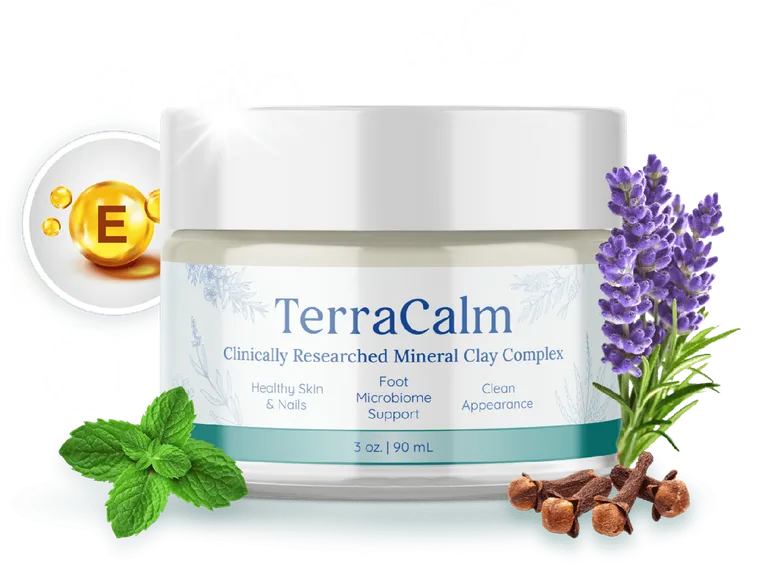
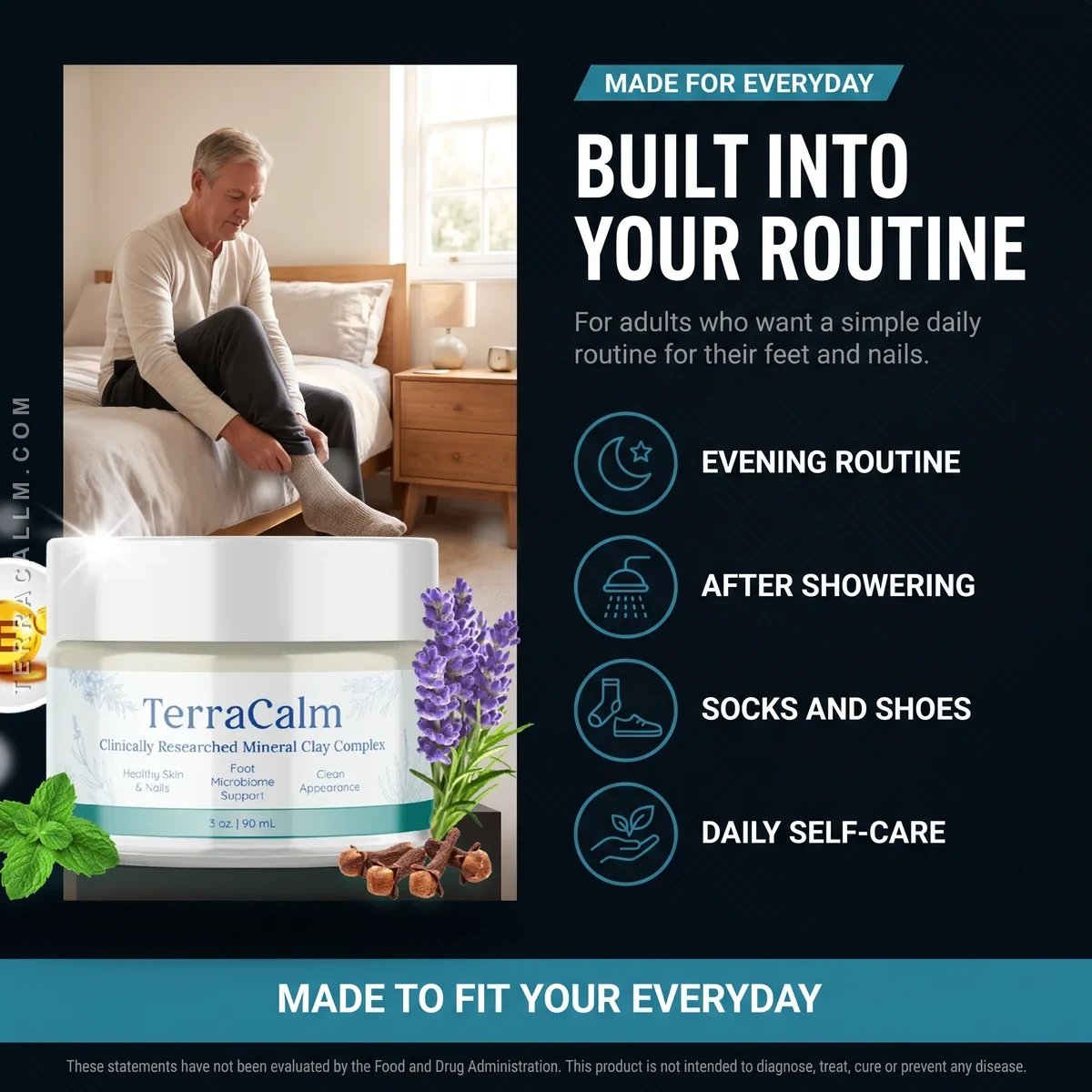
TerraCalm is a once-daily topical mineral clay complex — bentonite and kaolin clays traditionally used to help absorb surface moisture, with cooling peppermint, menthol and tea tree for a clean, fresh feel. Backed by a 60-day guarantee.
Daily remedies that keep feet fresh
Because the problem is moisture plus bacteria, the fixes all aim to keep feet dry and clean. None are complicated; the value is in doing them every day.
- ✓ Wash and dry daily. Clean your feet with soap and, crucially, dry thoroughly — especially between the toes.
- ✓ Rotate your shoes. Give each pair a full day to dry out; never wear damp shoes.
- ✓ Choose breathable materials. Moisture-wicking socks and leather or mesh shoes let feet breathe.
- ✓ Change socks midday. If your feet sweat heavily, a fresh pair halfway through the day resets the moisture.
- ✓ Absorb surface moisture. A moisture-absorbing clay or powder helps keep the skin surface dry through the day.
- ✓ Air them out. Go barefoot or wear open footwear at home to let feet dry between shoe-wearing stretches.
Where mineral clay and botanicals fit
A daily foot-care step can do double duty here. Mineral clays such as bentonite and kaolin are traditionally used to help draw out impurities and absorb excess surface moisture — useful when the core problem is dampness. Botanicals long associated with fresh feet, like tea tree, peppermint and menthol, lend a clean, cooling feel, while conditioning oils keep the skin from drying out in the process. A once-daily formula like TerraCalm combines those roles into one routine. It is a cosmetic product for a fresh, clean, healthy-looking appearance — not a medical treatment — and it slots neatly alongside the wash-dry-rotate basics above. For the broader nail side of foot care, see how to keep your nails healthy and strong.

A simple fresh-feet routine
- 1Morning: dry base. Wash, dry thoroughly between the toes, and apply a moisture-absorbing clay or powder before socks.
- 2Midday: reset. Swap in fresh socks if your feet run damp, especially on hot or active days.
- 3Evening: clean and air. Wash again, dry, and let feet breathe barefoot while your shoes dry out overnight.
- 4Weekly: rotate. Alternate at least two pairs of breathable shoes so neither stays damp.
When sweaty or smelly feet need a doctor
Everyday sweat and odour respond well to the habits above, but some situations deserve professional care. See a doctor if you have excessive sweating that soaks through socks every day — a treatable condition called hyperhidrosis — or a strong, persistent odour that good hygiene simply will not shift. Itching, peeling, redness, cracking or blisters between the toes can point to athlete’s foot, a fungal skin infection that needs proper treatment rather than cosmetic care. And anyone with diabetes or circulation concerns should have persistent foot changes assessed promptly.
What the clinical literature says about sweaty, smelly feet
Sweat itself is odourless; the smell is what skin bacteria make of it. An overview of plantar hyperhidrosis in Clinics in Podiatric Medicine and Surgery describes how excessive sweating on the soles creates exactly the warm, occluded, permanently damp environment those bacteria need Vlahovic, 2016.
There is a defined treatment ladder when it goes beyond ordinary. A review in American Family Physician sets out the management options for hyperhidrosis, beginning with topical aluminium-chloride antiperspirants before anything more involved McConaghy & Fosselman, 2018. For odour specifically, a literature review in the Journal of the American Academy of Dermatology surveys the treatment modalities for bromhidrosis and is a reminder that persistent malodour despite good hygiene is a medical question, not a hygiene failure Malik et al., 2023.
Feet that live in damp socks tend to accumulate other complaints. The same trapped moisture and pressure that feed odour also soften and split the skin at the back of the foot, which is where cracked, dry heels come from — and tight, sweaty shoes are a leading reason a toenail starts growing into the skin.
Frequently asked questions
Why do my feet sweat and smell so much?
Feet have more sweat glands per inch than almost anywhere on the body, and sweat itself is nearly odourless. The smell appears when that moisture is trapped inside socks and shoes, where naturally present skin bacteria break it down and release odour compounds. Warm, closed-in footwear and non-breathable synthetic socks make the problem worse.
What is the fastest way to stop smelly feet?
Attack the moisture and the bacteria at once: wash and dry feet thoroughly — especially between the toes — each day, rotate shoes so each pair dries fully for 24 hours, wear moisture-wicking socks, and keep the skin clean. Managing dampness is the single most effective everyday step because bacteria need moisture to thrive.
Do socks and shoes really make a difference?
A big one. Synthetic socks and non-breathable shoes trap heat and sweat, creating exactly the damp environment odour-causing bacteria prefer. Moisture-wicking socks, breathable footwear and rotating your shoes so they dry between wears all reduce that trapped moisture and, with it, the smell.
When are sweaty feet a medical issue?
Occasional sweaty, smelly feet are normal. See a doctor if you have excessive sweating that soaks through socks daily (a condition called hyperhidrosis), a persistent strong odour that good hygiene does not budge, or signs of a skin issue such as itching, peeling, redness or blisters, which can indicate athlete’s foot and needs proper treatment.
Can TerraCalm help with sweaty, smelly feet?
TerraCalm is a cosmetic topical mineral clay complex for everyday foot and nail care. Mineral clays are traditionally used to help absorb surface moisture, and botanicals like tea tree and peppermint are long associated with a clean, fresh feel — so it fits naturally into a fresh-feet routine. It is not a medical treatment and is not intended to diagnose, treat, cure or prevent any disease.
References
- Vlahovic TC. “Plantar Hyperhidrosis: An Overview” Clinics in Podiatric Medicine and Surgery, 2016. PMID 27215162
- McConaghy JR, Fosselman D. “Hyperhidrosis: Management Options” American Family Physician, 2018. PMID 30215934
- Malik AS, et al. “Bromhidrosis treatment modalities: A literature review” Journal of the American Academy of Dermatology, 2023. PMID 33482257
- American Podiatric Medical Association. “Foot health — sweaty feet and odour.” apma.org
- Mayo Clinic. “Sweating and body odor — Symptoms & causes.” mayoclinic.org
- Mayo Clinic. “Athlete’s foot — Symptoms & causes.” mayoclinic.org
- MedlinePlus (U.S. National Library of Medicine). “Foot odor.” medlineplus.gov
The TerraCalm Research Team is an independent group that writes plain-language, evidence-aware guides on everyday foot, skin and nail care. We read primary dermatology and public-health sources, describe ingredients in terms of their traditional and general use, and are careful to separate cosmetic care from medical treatment. Our articles are reviewed for accuracy before publishing and are intended for general education — not as a diagnosis or a substitute for your own clinician’s advice.
† These statements have not been evaluated by the Food and Drug Administration. This product is not intended to diagnose, treat, cure or prevent any disease. This article is for general information only and is not medical advice; consult a qualified professional about your individual situation.