Why Are My Toenails Yellow? Common Causes and the Daily Habits That Help
| Most common reason | If you are asking why are my toenails yellow, the everyday answer is usually staining from polish, natural thickening with age, or a warm, closed-in shoe environment — not something serious. |
| What helps | Regular polish-free breaks, keeping feet clean and dry, breathable socks and shoes, and a steady daily nail-care routine. |
| See a professional if | The nail thickens, crumbles, lifts, smells, hurts, or the colour keeps coming back — that can point to a fungal or medical cause worth checking. |
Glance down after a summer of sandals or a winter of thick socks and it is a surprisingly common moment: your toenails look yellow, dull or a little discoloured, and you find yourself asking why are my toenails yellow in the first place. It is one of the most searched foot-and-nail questions for good reason — the colour of a toenail is easy to notice and easy to worry about. The reassuring news is that most yellowing has ordinary, everyday explanations, and many of them respond well to small changes in your daily routine.
This guide walks through what a healthy nail looks like, the most common reasons toenails turn yellow, the lifestyle habits that help keep them looking clear, and the point at which yellow toenails are worth a professional’s eye rather than a home routine.
What a healthy toenail actually looks like
A healthy nail plate is not bright white — it is faintly pink where it sits over the nail bed, with a paler crescent (the lunula) near the base and a whitish free edge where it grows past the toe. The nail itself is translucent; the colour you see is mostly the skin and blood supply underneath showing through. That is why anything which either stains the keratin or thickens the plate can shift the whole nail toward yellow, cloudy or dull.
Toenails also grow slowly — often only about a millimetre a month, and more slowly than fingernails. Because of that pace, a colour change you notice today may have started weeks ago, and any improvement you make with better habits will also take weeks to grow fully into view. Patience is genuinely part of the process.
Why are my toenails yellow? The most common everyday causes
Yellowing rarely has a single cause. More often it is a combination of the things below stacking up over time.
1. Nail polish and staining
This is the number-one benign reason. Pigments in polish — particularly dark reds, plums and other deep shades — can seep into the porous top layers of the nail and leave a yellow or orange cast. Wearing polish continuously for weeks, skipping a base coat, or using strong acetone removers repeatedly all make staining more likely. The tell-tale sign is that the yellow appears fairly evenly and fades as the nail grows out once you take a polish break.
2. Age and natural thickening
As we get older, nails tend to grow more slowly, thicken and lose some of their translucency. Thicker, denser keratin simply looks more yellow or amber, even when nothing is wrong. This is one of the most common reasons older adults notice their toenails looking duller than they used to.
3. A warm, closed-in shoe environment
Feet spend much of the day sealed inside socks and shoes — warm, dark and often damp. That environment can leave nails looking dull and encourage the conditions that stain or cloud them. If your yellowing is worse in the warmer months, in non-breathable footwear, or after long days on your feet, the shoe environment is likely playing a part. Managing moisture and odour around the feet is closely related; our guide on why feet sweat and smell covers that side in more detail.
4. Fungal changes
A fungal nail infection is a genuine medical cause of yellow, thickened or crumbly toenails, and it is common. It usually starts at the edge or tip of one nail and slowly spreads, and the nail may thicken, become brittle, lift from the bed or develop an odour. Because a fungal nail is a medical condition — not a cosmetic one — it should be assessed and, if needed, treated by a doctor or podiatrist. No cosmetic routine, including TerraCalm, is a treatment for it.
5. Smoking, staining products and other culprits
Tobacco smoke can stain nails yellow, as can certain dyes and household products handled without gloves. Occasionally, persistent yellowing across many nails can be linked to a broader health matter, which is another reason a check-up is sensible if the colour is widespread and unexplained.
Give tired feet and nails a daily ritual
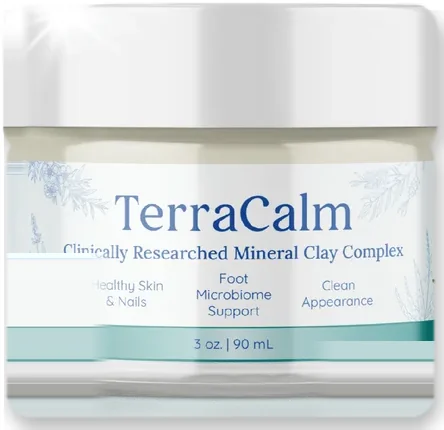
TerraCalm is a once-daily topical mineral clay complex — bentonite and kaolin clays with tea tree, clove and oregano oils and a soothing botanical blend — made to support clean, healthy-looking skin and nails. Backed by a 60-day guarantee.
Daily habits that help keep toenails looking clear
Because a nail grows out rather than heals in place, the goal of a good routine is not to “scrub away” colour that is already there — it is to support a clean surface so that clearer, fresh nail grows in. These habits do exactly that:
- ✓ Take polish breaks. Give toenails polish-free stretches, and always use a base coat under coloured polish to reduce staining.
- ✓ Keep feet clean and dry. Wash daily and dry thoroughly, especially between the toes where moisture lingers.
- ✓ Choose breathable socks and shoes. Rotate your shoes so each pair fully dries, and pick moisture-wicking socks over synthetics that trap sweat.
- ✓ Trim straight across. Neatly trimmed nails collect less debris under the free edge, where discolouration often hides.
- ✓ Condition the nail and skin daily. A conditioning clay or balm over the nails, cuticles and surrounding skin supports a clean, cared-for surface.
- ✓ Never share tools or files. Clean clippers and files, and keep them to yourself, to avoid passing anything between nails.
The skin and environment around your nails matter too
Toenails do not exist in isolation. They sit within skin that spends most of the day in that warm, enclosed, sometimes damp shoe environment — exactly the setting that makes a clean, balanced surface harder to maintain. That is where thoughtful topical care earns its place in a routine.
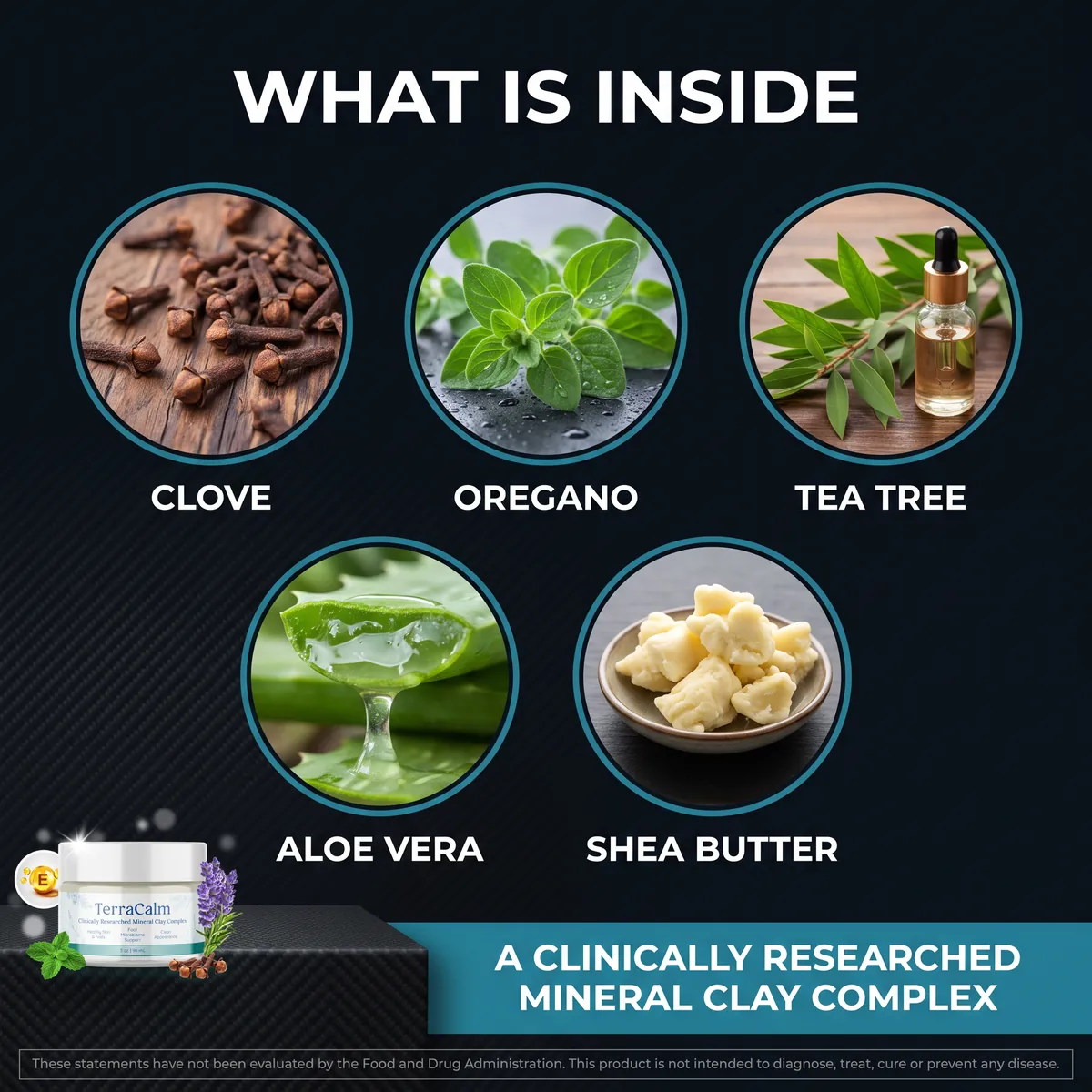
Mineral clays such as bentonite and kaolin are traditionally used to help draw out impurities and absorb excess surface moisture, which is useful around feet that sweat. Botanicals like tea tree, clove and oregano oils have a long history in foot care for helping the skin feel clean and fresh, while conditioning oils — aloe, shea butter, jojoba and vitamin E — soften and soothe the skin around the nail. Bringing those roles together in one daily step is the idea behind a formula like TerraCalm. It will not change the colour already locked into an existing nail, but it supports the clean, well-tended environment in which clearer new nail can grow.
A simple weekly foot-and-nail routine
The best routine is the one you keep. Keep it short and repeatable:
- 1Daily: wash and dry. Clean your feet and dry carefully between the toes.
- 2Daily: condition. Massage a small amount of a topical clay or conditioning balm over nails, cuticles and surrounding skin.
- 3Weekly: trim and inspect. Cut straight across, tidy the free edge, and note any change in colour, thickness or texture.
- 4Ongoing: breathe. Rotate shoes, wear breathable socks, and give bare feet time to air out.
If you want the full daily framework, our companion guide on how to keep your nails healthy and strong lays out the habits and nutrients behind resilient nails, and what causes brittle nails that split and peel covers the texture side of nail health.
When yellow toenails deserve a doctor’s eye
Everyday care handles appearance and comfort, but it is not a substitute for medical advice. Make an appointment with a physician or podiatrist if the yellowing spreads to other nails, if a nail thickens, crumbles or lifts from the nail bed, if there is pain, odour or discharge, or if the colour keeps returning even after the nail grows out. People living with diabetes or circulation concerns should be especially attentive and have any nail change looked at promptly, because foot problems can progress quietly.
Start Your Daily Foot & Nail Ritual
What the clinical literature says about yellow nails
Colour is the nail sign clinicians take most seriously, because it is the one most often driven from the inside. A 2025 review in the Journal of the American Academy of Dermatology works through changes in nail colour and vasculature as signs of systemic disease, and is the reason a colour change affecting several nails at once is worth a professional look rather than a home remedy Zhou et al., 2025.
There is even a named condition at the far end of the spectrum: yellow nail syndrome, described in the Dermatology Online Journal, in which slow-growing, thickened yellow nails appear alongside respiratory and lymphatic findings Elmariah et al., 2008. It is rare, and most yellow toenails are not it. Far more common is a fungal cause, and a paper in the Journal of the European Academy of Dermatology and Venereology sets out the risk factors — age, trauma, diabetes, poor circulation, communal changing rooms — that make it likelier Tosti et al., 2005.
Yellowing on a nail that is also digging into the skin at the side is a different problem wearing the same colour. If one toe in particular is sore as well as discoloured, read what causes ingrown toenails before assuming the colour is the whole story.
Frequently asked questions
Why are my toenails yellow but not painful?
Painless yellowing is very often cosmetic — most commonly staining from dark or long-worn nail polish, or the natural thickening and colour change that comes with age. It can also reflect a warm, closed-in shoe environment. Because it is painless it is easy to ignore, but a few daily habits usually help the look improve as the nail grows out.
Can nail polish really stain toenails yellow?
Yes. Pigments in polish — especially dark reds and deep colours — can seep into the top layers of the keratin and leave a yellow or orange cast, particularly when polish is worn continuously for weeks without a base coat. Giving nails regular polish-free breaks and using a base coat both help reduce this kind of staining.
Do home remedies remove yellow from toenails?
Because a toenail grows out rather than repairs itself, no topical routine instantly “removes” colour that is already in the nail plate. What consistent, gentle daily care can do is support a clean nail surface and let clearer, fresh nail grow in over the weeks that follow. Aggressive scrubbing or bleaching tends to do more harm than good.
When should yellow toenails be checked by a doctor?
See a physician or podiatrist if the yellowing spreads, the nail thickens, crumbles or lifts from the nail bed, if there is pain, odour or discharge, or if the colour keeps returning after the nail grows out. People with diabetes or circulation concerns should have any nail change looked at promptly.
Is TerraCalm a treatment for yellow or fungal toenails?
No. TerraCalm is a cosmetic topical mineral clay for everyday skin, nail and foot care, intended to support a clean, healthy-looking appearance. It is not intended to diagnose, treat, cure or prevent any disease, including nail infections. If you suspect a fungal nail, see a healthcare professional.
References
- Zhou MH, et al. “Part I. Changes in Nail Color and Vasculature as Signs of Systemic Disease” Journal of the American Academy of Dermatology, 2025. PMID 41176255
- Elmariah SB, et al. “Yellow nail syndrome” Dermatology Online Journal, 2008. PMID 19061616
- Tosti A, et al. “Patients at risk of onychomycosis—risk factor identification and active prevention” Journal of the European Academy of Dermatology and Venereology, 2005. PMID 16120200
- American Academy of Dermatology. “How to care for your nails.” aad.org
- Mayo Clinic. “Nail fungus — Symptoms & causes.” mayoclinic.org
- American Academy of Dermatology. “12 nail changes a dermatologist should examine.” aad.org
- MedlinePlus (U.S. National Library of Medicine). “Nail abnormalities.” medlineplus.gov
The TerraCalm Research Team is an independent group that writes plain-language, evidence-aware guides on everyday foot, skin and nail care. We read primary dermatology and public-health sources, describe ingredients in terms of their traditional and general use, and are careful to separate cosmetic care from medical treatment. Our articles are reviewed for accuracy before publishing and are intended for general education — not as a diagnosis or a substitute for your own clinician’s advice.
† These statements have not been evaluated by the Food and Drug Administration. This product is not intended to diagnose, treat, cure or prevent any disease. This article is for general information only and is not medical advice; consult a qualified professional about your individual situation.