Why Are My Heels Cracked and Dry? Causes and Daily Foot Care
| The main answer | Why are my heels cracked and dry? Thick heel skin loses moisture, hardens and then splits under the pressure of standing and walking — open-back shoes, dry air and harsh washing make it worse. |
| Not usually a deficiency | Most cracked heels are about moisture and footwear, not vitamins — though severe dryness can occasionally be worth a doctor’s mention. |
| What helps | Soak, gently file the hard skin, moisturise richly (socks overnight help), wear supportive closed shoes, and stay hydrated. |
Cracked heels are one of those problems that seem cosmetic until the day one splits deep enough to catch on the bed sheets or sting with every step. If you have been wondering why are my heels cracked and dry, the answer is a satisfying mix of simple physics and skin biology — and, happily, most of it is well within your control. The heel carries your whole body weight over a small area, and when the thick skin there dries out, it loses the flexibility to handle that load and cracks instead.
This guide explains what is really happening in cracked heel skin, the everyday causes behind it, the daily foot-care routine that softens and prevents cracks, and the point at which a deep or painful crack should be seen by a professional.
What is actually happening in cracked heels
The skin on your heel is naturally thick because it has to be — it is built to take pressure. When you stand or walk, the fat pad under the heel flattens and spreads sideways, and the skin has to stretch with it. Healthy, well-moisturised skin is flexible enough to do that. But when heel skin dries out it becomes hard, stiff and inelastic; instead of stretching, it splits. Often a rim of hard, thickened skin (a callus) forms around the edge of the heel first, and it is that hard border that eventually cracks — those splits are called fissures. So cracked heels are really a story of two ingredients: pressure from below, and dryness that robs the skin of the flexibility to cope with it.
The everyday causes of dry, cracked heels
Most cracked heels come from ordinary, fixable factors, frequently several at once:
- ✓ Open-back shoes. Sandals and flip-flops let the heel spread with every step without support, stressing dry skin.
- ✓ Long hours standing. Extended time on hard floors keeps the heel under constant pressure.
- ✓ Dry or cold air. Low humidity, winter heating and air conditioning pull moisture from the skin.
- ✓ Hot showers and harsh soap. They strip the skin’s natural oils, leaving heels drier.
- ✓ Naturally dry skin. Some people simply have drier skin, and it shows first on the heels.
- ✓ Extra weight and age. More load on the heel, and skin that holds less moisture over time.
Dryness on the feet rarely stops at the heels — if the skin around your toenails is also dry and splitting, the same moisture principles in why are my cuticles dry and cracked apply there too.
Are cracked heels a sign of a deficiency?
This worry comes up a lot, so it is worth being clear: for the great majority of people, cracked heels are about pressure, footwear and dryness — not a vitamin deficiency. That said, skin that stays severely dry despite good care can occasionally be linked with low intake of certain nutrients, or with conditions such as an underactive thyroid, diabetes or eczema. The sensible approach is to treat the obvious causes first with moisture and better shoes; if heels remain badly cracked despite weeks of consistent care, or if the dryness comes with other symptoms, that is the time to mention it to a doctor rather than reaching for supplements on a hunch. A balanced diet supports skin generally — see the best foods for strong, healthy nails, many of which help skin too.
Keep heel skin soft and supple
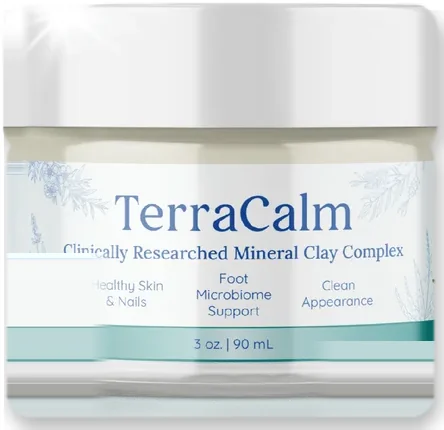
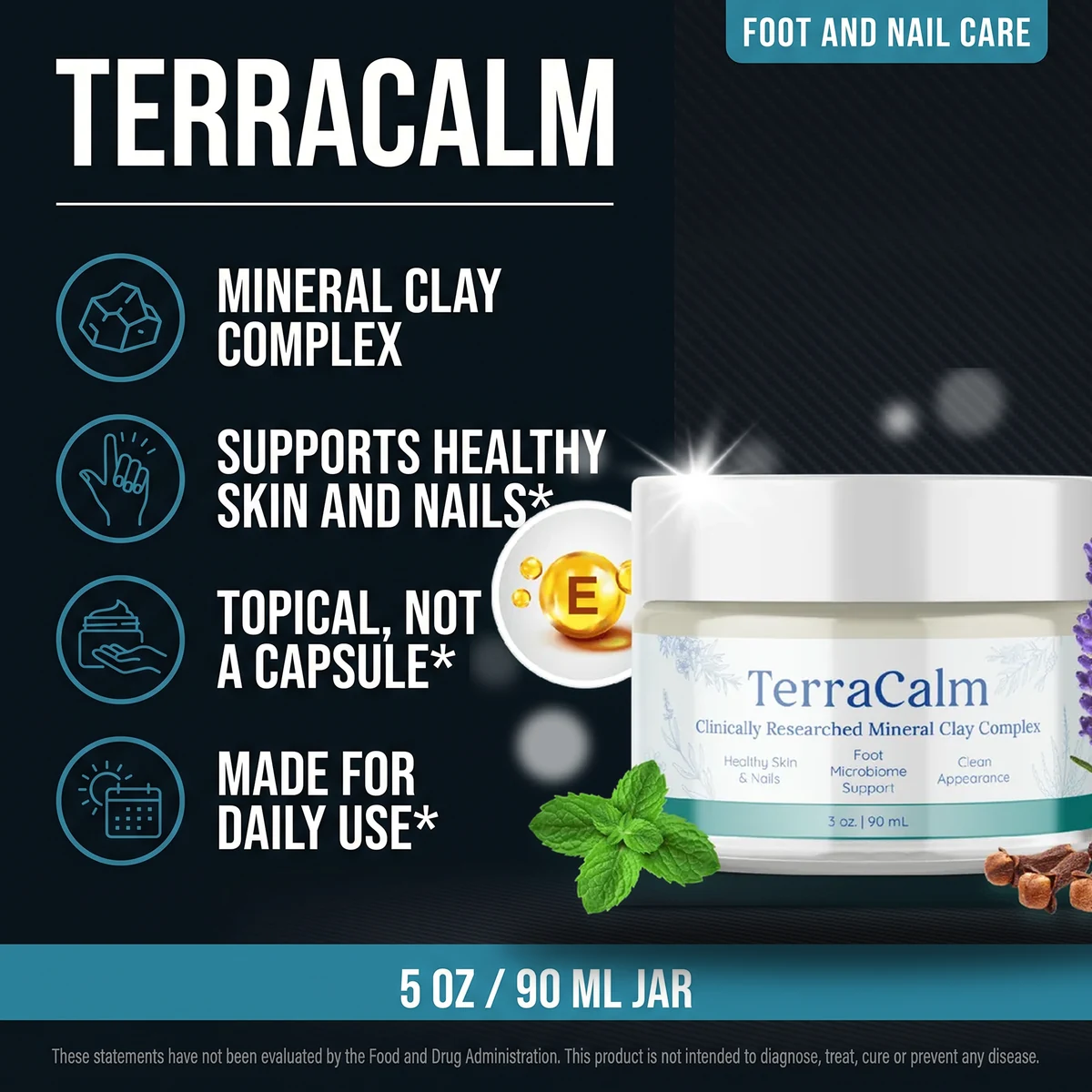
The single most effective thing for cracked heels is consistent moisture, and daily conditioning is exactly where TerraCalm fits. It is a once-daily topical mineral clay complex with skin-loving oils and butters — vitamin E, aloe, shea butter and jojoba — alongside clove, tea tree and oregano, made for everyday foot and skin care. It keeps heel skin soft and cared for so it stays flexible instead of hard and cracking. Backed by a 60-day guarantee.
The daily routine that softens and prevents cracked heels
Cracked heels respond beautifully to consistency. A short nightly routine beats an occasional heroic effort:
- ✓ Soak briefly. Ten minutes in warm (not scalding) water softens the hard skin.
- ✓ Exfoliate gently. While the skin is damp, use a foot file or pumice on the thickened areas — a little, regularly, not a lot at once.
- ✓ Moisturise richly. Apply a thick, oil- or butter-based conditioner while skin is still slightly damp to lock moisture in.
- ✓ Socks overnight. Cotton socks over moisturised heels help it soak in while you sleep.
- ✓ Wear supportive shoes. Closed, cushioned, well-fitted shoes reduce the spreading that splits the skin.
- ✓ Cool the showers. Shorter, cooler washes and a gentle cleanser preserve the skin’s own oils.
- ✓ Hydrate and be patient. Drink enough water and give the routine a couple of weeks to show.
Avoid the temptation to shave or aggressively cut thick heel skin with a blade — it is easy to overdo, and it can lead to injury or infection, particularly if you have reduced sensation in your feet.
Where conditioning care fits
Softening cracked heels is fundamentally about restoring moisture and flexibility to hard skin, and that is what daily conditioning does. Oils and butters such as vitamin E, aloe, shea, jojoba and sweet almond soften and support the skin barrier, while clove, tea tree and oregano are traditionally valued in foot care, and mineral clays like bentonite and kaolin help keep the surface clean and balanced. A once-daily routine with TerraCalm makes it easy to keep heels supple night after night — which is really the whole battle. For a wider foot and nail routine, read how to keep your nails healthy and strong.
When cracked heels deserve a doctor’s eye
Most cracked heels improve with moisture and better footwear, but see a doctor or podiatrist if a crack is deep, painful, bleeding, or shows signs of infection such as redness, warmth, swelling or pus. Get help sooner rather than later if you have diabetes, nerve problems in the feet or poor circulation, because a heel fissure can become a more serious wound in those situations. Very dry, thickened skin that does not respond to weeks of good care, or that comes with widespread dry skin elsewhere, is also worth having assessed.
Start Your Daily Foot-Care Ritual
What the research says about moisturising dry heels
Heel dryness is measurable, which means the effect of treating it is too. Researchers writing in Skin Research and Technology developed a grading technique for heel xerosis specifically so that the response to a moisturiser could be tracked rather than guessed, and demonstrated improvement in the graded dryness with regular application Choi et al., 2018.
A randomised clinical trial in the Journal of the American Podiatric Medical Association compared two moisturisers head to head in foot xerosis and found both effective, which is a useful result: consistency matters more than the specific product Parker et al., 2018. A further randomised, evaluator-blind study found that a humectant-rich formulation improved foot xerosis and that twice-daily application outperformed once-daily Lodén et al., 2013. Frequency, in other words, is the variable most within your control.
Frequently asked questions
Why are my heels cracked and dry?
Cracked, dry heels happen when the thick skin on the heel loses moisture, hardens and then splits under the pressure of standing and walking. Everyday causes include open-back shoes and sandals, long periods on your feet, dry or cold air, hot showers and harsh soaps, naturally dry skin, and carrying extra weight. The fat pad under the heel spreads out with each step, and dry, inflexible skin cracks instead of flexing.
How do I get rid of cracked heels?
Soak the feet in warm water, gently exfoliate the hard skin with a foot file or pumice while damp, then apply a rich moisturiser and, ideally, put on cotton socks to lock it in overnight. Do this consistently rather than once. Wearing closed-back supportive shoes, avoiding very hot showers and staying hydrated all help. Deep, painful or bleeding cracks should be seen by a podiatrist.
Are cracked heels a sign of a vitamin deficiency?
Usually not. Most cracked heels are caused by everyday pressure, footwear and dry skin rather than a deficiency. Occasionally very dry skin is linked with low intake of certain nutrients or with conditions such as thyroid problems or diabetes, so if heels are severely dry despite good care, or come with other symptoms, it is worth mentioning to a doctor. For most people, moisture and footwear are the real levers.
Do open-back shoes cause cracked heels?
They are a common contributor. Flip-flops, sandals and other open-back shoes let the heel’s fat pad spread sideways with every step without support, which stresses dry skin and encourages it to split. Closed, well-fitted, supportive shoes cushion the heel and reduce that spreading, so switching footwear often makes a noticeable difference.
How long do cracked heels take to heal?
Mild dryness and shallow cracks often improve within one to two weeks of consistent daily soaking, gentle exfoliation and rich moisturising. Thick calluses and deeper fissures take longer and need patience, since heel skin is slow to remodel. The key is doing it every day rather than in bursts. Deep or painful cracks that are not improving should be seen by a professional.
Does TerraCalm help dry, cracked heels?
TerraCalm is a cosmetic topical mineral clay complex for everyday foot and skin care. It is not a medical treatment for cracked heels, but conditioning oils and butters that keep the skin soft and supple are exactly the kind of daily care that helps dry heels look and feel better. It is not intended to diagnose, treat, cure or prevent any disease.
References
- Choi JY, et al. “A new technique for evaluating heel xerosis grade and the effects of moisturizer on heel skin dryness” Skin Research and Technology, 2018. PMID 29498116
- Parker JC, et al. “Effectiveness of Two Moisturizers in the Treatment of Foot Xerosis (A Randomized Clinical Trial)” Journal of the American Podiatric Medical Association, 2018. PMID 30742522
- Lodén M, et al. “The influence of a humectant-rich mixture on normal skin barrier function and on once- and twice-daily treatment of foot xerosis. A prospective, randomized, evaluator-blind, bilateral and untreated-control study” Skin Research and Technology, 2013. PMID 23521561
- American Academy of Dermatology. “How to care for dry, cracked heels.” aad.org
- Mayo Clinic. “Dry skin – symptoms and causes.” mayoclinic.org
- NHS. “Cracked heels.” nhs.uk
- MedlinePlus (U.S. National Library of Medicine). “Dry skin.” medlineplus.gov
The TerraCalm Research Team is an independent group that writes plain-language, evidence-aware guides on everyday foot, skin and nail care. We read primary dermatology and public-health sources, describe ingredients in terms of their traditional and general use, and are careful to separate cosmetic care from medical treatment. Our articles are reviewed for accuracy before publishing and are intended for general education — not as a diagnosis or a substitute for your own clinician’s advice.
† These statements have not been evaluated by the Food and Drug Administration. This product is not intended to diagnose, treat, cure or prevent any disease. This article is for general information only and is not medical advice; consult a qualified professional about your individual situation.